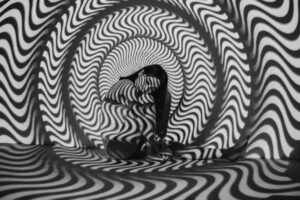

Hypnosis is usually described as a state of focused attention, physical relaxation, and increased responsiveness to suggestions. It is not the same as being asleep or unconscious. Many people remain aware of what is happening during a session, can hear the practitioner, and can choose to speak or stop if they wish.
Hypnotic experiences vary considerably. Some people notice obvious changes in awareness, while others feel only mildly relaxed and focused. There is no single symptom that proves someone is hypnotised, and the absence of dramatic sensations does not necessarily mean that a session has had no effect.
Common signs and sensations during hypnosis
During a guided hypnosis session, a person may experience a combination of physical relaxation and mental absorption. Common experiences include:
- Relaxed muscles and reduced physical tension
- Slower, steadier breathing
- Heavy, light, warm, or unusually still limbs
- Fluttering eyelids or closed eyes
- Focused attention on the practitioner’s voice, an image, or a particular idea
- Less awareness of background sounds and other distractions
- A calm, daydream-like, or inwardly focused state
These signs can also occur during ordinary relaxation, meditation, daydreaming, or the period just before sleep. They should therefore be understood as possible experiences rather than a checklist or medical test.
Mental and perceptual changes
Hypnosis can change the way a person directs attention and responds to imagination. Some people find it easier to picture scenes vividly or engage with ideas suggested by the practitioner. Others describe a temporary shift in how they experience their surroundings or their own body.
Possible mental experiences include:
- Intense concentration and reduced awareness of external distractions
- Vivid imagery or visualisation
- A sense that time is moving unusually quickly or slowly
- Changes in the perceived size, weight, temperature, or position of a body part
- A feeling of distance from immediate surroundings
- Greater openness to suggestions that fit the purpose of the session
- Emotional responses such as relief, calm, laughter, or tears
Increased suggestibility does not mean that a person loses all judgment or control. People generally retain the ability to reject suggestions that conflict with their values or wishes. Hypnosis also cannot be assumed to produce a deep or dramatic trance every time.
Do people remember hypnosis?
Memory after hypnosis differs from person to person. Some people remember the entire session clearly, while others recall it as a relaxed sequence of thoughts and images or remember only selected details. A person may also feel that time passed quickly without having experienced actual amnesia.
For this reason, hypnosis should not be treated as a guaranteed way to recover accurate memories. Memories experienced during hypnosis can still be incomplete or mistaken, just as memories recalled in other circumstances can be.
What hypnosis usually does not feel like
Hypnosis is not necessarily a loss of consciousness, a state of helplessness, or a form of mind control. A participant may be deeply relaxed while still noticing the practitioner’s words, thinking independently, and remaining aware of personal boundaries. Some sessions feel peaceful and immersive; others feel like ordinary conversation combined with focused imagination.
Not everyone responds in the same way. Willingness to participate, expectations, concentration, and previous experience can all influence how hypnosis feels. Some people enter a noticeable hypnotic state easily, while others experience only modest relaxation or focus.
After-effects and when to seek support
Many people feel calm, refreshed, or mentally focused after hypnosis. Temporary grogginess, mild disorientation, or emotional sensitivity may also occur, particularly after an intense or deeply relaxing session. These feelings should normally be discussed with the practitioner if they are uncomfortable or do not settle.
Anyone considering hypnosis for a specific health or emotional concern should choose a suitably trained professional and ask about the approach being used. Hypnosis should complement appropriate healthcare rather than replace assessment or treatment when those are needed.
Recognising your own response
The most useful way to identify a hypnotic response is to notice changes from your usual state without trying to force a particular result. You might observe your breathing, muscle tension, attention, imagery, sense of time, and emotional reactions. A session does not need to produce unusual sensations to be meaningful: quiet focus and ordinary relaxation can be part of the experience too.
Dr. John Renoldson is a distinguished professor of Clinical Research Hypnotherapy He holds a PhD in Clinical Psychology and specializes in hypnotherapy and scientific research to enhance therapeutic outcomes. Dr. Renoldson has authored numerous peer-reviewed articles on the efficacy of hypnosis in treating conditions.